Showing posts with label Orson Welles. Show all posts

Tuesday, May 20, 2025

Simon Says: Watch Me Take on the World of Ballet in “Etoile”

I’ve always been intrigued by Simon Callow. There seems to be nothing he can’t do. In 1979 he set the theatre world abuzz with his portrayal of cocky young Wolfgang Amadeus Mozart in Peter Shaffer’s Amadeus. (By the time the play became an Oscar-winning film, he had aged out of the part and taken a lesser role.) He later played memorable mostly-comic roles in classic British costume dramas like A Room with a View (as the jovial Reverend Beebe), Howards End, and Shakespeare in Love. I particularly relish his unforgettable performance in Four Weddings and a Funeral, one that prompts the film’s most touching moment. Clearly a man who is intellectually restless, Callow has tried directing too, and has published biographies of such major artistic figures as Oscar Wilde, Charles Laughton, Richard Wagner, and Orson Welles. I read the first volume of his Welles book, The Road to Xanadu¸ and found it a fascinating exploration of Welles as an actor, seen through the eyes of a kindred spirit.

 But it was Callow’s first book Being an Actor (originally 1984, but recently updated), that had a small impact on my own life. When I was still in my Roger Corman years, this in-depth primer on the theatrical arts was enthusiastically recommended to me by the actor David Birney. Having read it, I couldn’t wait to meet Callow, and the opportunity presented itself when he came to L.A. to direct an obscure drama at the Los Angeles Theatre Center. He was happy to be interviewed by me, partly because he hoped for an introduction to Roger Corman. (Yes, he had a film project in mind, but ultimately Roger didn’t cotton to it.) In any case, that’s how I ended up having a sumptuous breakfast with Simon in the dining room of  L.A.’s venerable Biltmore Hotel. To my not very great surprise, this was a man who truly enjoyed good food. I think it’s fair to say he has a real appetite for life in all its forms.

 I’ve been thinking of Simon of late because I just finished watching Etoile, the Amazon Prime mini-series in which he has a central role.  It was created by Amy Sherman-Palladino and husband Daniel Palladino, who both write and direct. As the folks responsible for Gilmore Girls and more recently The Marvelous Mrs. Maisel, both know how to put together a series that blends comedy and human drama. Set in the ballet world, Etoile posits that major dance companies in Paris and New York City trade prime talents for a season, in order to goose ticket sales. Naturally there’s a lot of emotion involved, as well as some spectacular dancing. Top-billed Luke Kirby struts and frets as the artistic director of the New York Metropolitan Ballet. (He was Lenny Bruce in Mrs. Maisel.) Charlotte Gainsbourg is appealing as his beleaguered French counterpart. There are lots of storylines involving various dancers (as well as one extremely petulant but talented choreographer), but the most unforgettable is Lou de Laâge as Cheyenne Toussant, a Parisian “étoile” (prima ballerina) whose ego is as large as her talent, and whose sexual appetites are not easily satisfied. She’s a wonderful whirlwind of a character, one who seems perennially angry, though there are hints of her softer side. 

  Among all these talents lurks Simon Callow as Crispin Shamblee, a British oil baron who donates ostentatiously to both ballet companies, and expects their fealty in return. He is always popping up at the wrong moment, thoroughly enjoying his ability to make trouble for one and all. A man of many appetites indeed.


Tuesday, March 28, 2023

The Catch-22 of Translating a Hit Novel to the Screen

At the end of the Sixties the book that everyone was reading was Joseph Heller’s darkly satiric World War II novel, Catch-22.  And the movie that everyone was watching was The Graduate, the outrageous romantic comedy directed by Mike Nichols. So there was little surprise, when word spread that Nichols would be directing a screen version of Catch-22, that audiences couldn’t wait to see the results.

 Nichols’ film, released in June 1970, unfortunately pleased almost no one. This despite the fact that it was a serious effort to translate a complex, almost hallucinatory, novel to the screen.  The Writers Guild of America did nominate Buck Henry’s script as the best screen drama adapted from another medium, but it didn’t win. That same year, M*A*S*H, a much more popular depiction of the truism that “war is hell,” took home a WGA Award for comic adaptation. Perhaps it was the success of M*A*S*H, featuring a lively rendering by Robert Altman of a behind-the-lines Korean War story, that undercut Catch-22’s box-office chances. Or  perhaps the brilliant, bitter Catch-22 just couldn’t work without Heller’s sparklingly ironic prose.

 Still, it was a worthy attempt. Nichols, who’d shown such visual flair in The Graduate, had fun depicting the almost operatic lift-off of WWII era bomber jets. Having used the songs of Simon and Garfunkel to great effect in The Graduate, he mostly avoided music in the far more serious Catch-22, but at one key point tried an outlandish reference to the opening strains of “Thus Spoke Zarathustra,” familiar to anyone who’d seen 2001: A Space Odyssey. (And, in that era, who hadn’t?)  

 The large cast is a remarkable gathering of Hollywood talents. Nichols was known for his casting savvy, and we can fully believe Martin Balsam as a gruffly maniacal Col. Cathcart, Richard Benjamin as a smarmy Major Danby, Anthony Perkins as a vulnerable Chaplain Tappman, Bob Newhart as an anxious Major Major, and Orson Welles as a bloated General Dreedle. The leading role, Yosarian, is that of a neurotic cipher, and Alan Arkin is particularly good at conveying his anxiety about war, the U.S. Army, and life in general.

 Given the worldwide success of The Graduate, it’s not surprising that Nichols again turned to several performers from that 1967 film. Elizabeth Wilson (Benjamin’s anxious mom in The Graduate) has a tiny but memorable role as the mother of a dying soldier. Norman Fell (the cranky landlord of Ben’s Berkeley rooming house) is seen here as a blunt sergeant. Buck Henry, who had brilliantly adapted Charles Webb’s The Graduate for the screen while also playing a skeptical desk clerk, again performs double duty, donning  a creepy little mustache to portray Balsam’s toadying sidekick, Colonel Korn.

 Nichols also cast Art Garfunkel, a novice actor and one-half of the musical duo whose songs dominate the score of The Graduate, as the naïve young Nately. (The following year “Arthur” Garfunkel was a central figure in Nichols’ corrosive Carnal Knowledge.) Charles Grodin, who to the end of his life insisted that he’d been cast by Nichols as Benjamin Braddock but had turned the role down, plays the oblivious bombardier on Yosarian’s plane. But what of the screen’s actual Benjamin Braddock? I’ve learned that Dustin Hoffman, whose Hollywood career burst into life with The Graduate, badly wanted to play the shifty Milo in Catch-22. Perhaps Nichols was truly offended that Hoffman took on, immediately following The Graduate, the scruffy role of Ratso Rizzo in Midnight Cowboy. In any case Nichols gave the role of Milo not to Hoffman but to his Midnight Cowboy co-star, Jon Voigt.


Friday, January 7, 2022

Peter Bogdanovich Has Come and Gone

Well, we just lost another of those daring young men who made the Hollywood films of the 1970s so exciting. Peter Bogdanovich is gone, at age 82. He broke into the industry quite young, causing many movie historians then and now to compare him to another “boy genius,” Orson Welles. Clearly relishing the comparison, he wore ascots, cultivated friendships with some of the greats of the Golden Age, and shot two of  his best films (The Last Picture Show and Paper Moon) in living black & white.

 When I think of Bogdanovich, though, Orson Welles doesn’t come to mind. Instead I remember Roger Corman, my former boss, as the man who gave Bogdanovich his first big break. The story has been told many times, but I much prefer the version of Polly Platt, Bogdanovich’s first wife, his creative partner, and the woman he dumped for Cybill Shepherd on the set of The Last Picture Show. Polly, who passed away in 2011, spoke to me at length three years earlier, about how Roger jumpstarted the movie careers of two young east-coasters who were passionate about the film medium.

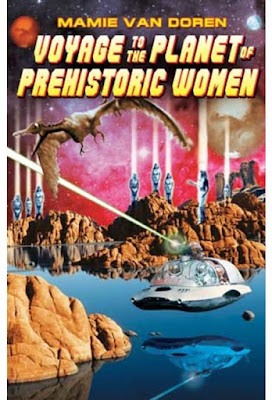
 Peter and Polly first met Roger Corman at a screening. (She thinks it was Last Year at Marienbad.) Afterwards, they chatted about film over coffee, and Roger was obviously impressed by their determination to find careers in the industry. In her words, “Roger wanted to make money and we wanted to make movies. It was a perfect marriage.” One of the duo’s first assignments for Roger was to improve upon a Soviet sci-fi film he’d bought. It had great special effects (including a space ship flying through the cosmos), and their job was to make it attractive to American drive-in audiences. After they rewrote the script to include a crash-landing on an exotic inter-galactic planet, Roger allotted them one week to shoot new footage that featured sexpot Mamie Van Doren as a mermaid wearing a seashell bra.. The result: Voyage to the Planet of Prehistoric Women.

 They were also all-purpose assistants when Roger directed his biker classic, The Wild Angels. Peter, who mid-production finagled the job of second-unit director, has said, “I went from getting the laundry to directing the picture in three weeks. Altogether, I worked twenty-two weeks—pre-production, shooting, cutting, dubbing—I haven’t learned as much since.” (Polly worked alongside him on a script rewrite, and also found herself doubling on the back of a chopper for female lead Nancy Sinatra.)

 The reward came when Roger approached them with another challenge. Actor Boris Karloff owed him two days of work from an earlier film, The Terror. This had been one of  Roger’s lesser flicks, and they were free to use its footage along with new material to make a horror movie of their own. It was Polly, still traumatized by the JFK assassination, who came up with the concept of a sniper running amok at a drive-in movie theatre. They collaborated on the script; Peter directed the film while also playing a key role. With the release of Targets in 1968. his Hollywood career was fully launched.

 Nor did Bogdanovich’s relationship with Corman end there. As my former colleague, filmmaker Joe Dante, once told me, “The thing about Roger is that you meet him on the way up, and if you’re not lucky you meet him again on your way down.” In 1979, while Bogdanovich was in a downward spiral, Roger hired him to shoot Saint Jack, about an American hustler in Singapore.. Dante remembers, “It turned out to be a good picture, and it put him back on the road.”


Thursday, September 23, 2021

“Third Man” Out

The Third Man is a tricky little movie, one that’s full of surprises for the unwary. For one thing, the title is deliberately misleading. The identity of that mysterious third man is, in the scheme of things, quite beside the point. And the zither theme that continues throughout the film is so jaunty that you suspect you’re being prepared for a joyous romp. Something Fellini-esque, maybe? (Hardly true, as it turns out.) 

Finally, The Third Man is usually considered an Orson Welles tour-de-force. In fact, he didn’t direct (Carol Reed did), though he’s given some kudos for unbilled contributions to the screenplay written by British novelist Graham Greene. And his role in the film, though pivotal, is fairly small in terms of screentime. Still, he makes an indelible impression, and The Third Man’s intensely dramatic stylistics owe much to such Welles masterworks as Citizen Kane and The Stranger.

 One thing Welles apparently did contribute: the film’s most famous line. During a key conversation with Joseph Cotten on a Viennese Ferris wheel, he quips sardonically, as only Welles can, “In Italy, for 30 years under the Borgias they had warfare, terror, murder, and bloodshed, but they produced Michelangelo, Leonardo da Vinci and the Renaissance. In Switzerland, they had brotherly love; they had five hundred years of democracy and peace – and what did that produce? The cuckoo clock.” Bingo!

 The Third Man, released in 1949, goes beyond the Americana of Citizen Kaine and The Magnificent Ambersons to cast a cold eye on post-Nazi Europe. Its view of a Vienna awash with occupation forces and petty criminals is totally chilling: almost everyone in the cast seems on the take, or suffers from conflicting allegiances Like, for instance, the leading lady (Alida Valli), who in continually switching sides proves herself to be a true femme fatale. And Americans in this world don’t come off any better than their European counterparts. Joseph Cotten’s character, a two-bit novelist visiting from the U.S., is almost terminally naïve. And then there’s the ominous Harry Lime. Today I suspect we’re particularly sensitive to the enormity of Lime’s shenanigans, watering down penicillin for his personal profit, and shrugging off the fact that children are dying – or worse.

 The world of The Third Man is that of film noir, international-style. There’s no question it looks fabulous. If the origins of film noir tend to connect with Raymond Chandler’s prematurely seedy L.A., this movie proves that the Old World is even more decadent and down-at-the-heels than the New. Vienna, in The Third Man, is a heady combination of dilapidated grandeur and police state. We see, usually by moonlight, the rococo buildings and twisty streets of the old city, as well as the shadowy depths of its sewers. (The film’s one Oscar went to Robert Kasker for his moody black-&-white cinematography, which take full advantage of location shooting.)

 I also commend the filmmakers for their wonderful collection of faces. The bit players in The Third Man are often wonderfully eccentric, even macabre, to look upon. They frequently speak in untranslated German, so that we share with Joseph Cotten a sense of displacement and being the odd man out. The dapper Cotten, one of the original Mercury Players, seemed to specialize in being a foil to Welles: in films like Citizen Kane he was the nice guy who both admired and ultimately couldn’t help resisting Welles’ powerfully physical presence. He plays that role here as well. But let’s not forget Hitchcock’s 1943 Shadow of a Doubt, in which the sinister side of Cotten comes fully into the ligh.


.