Showing posts with label Polly Platt. Show all posts

Friday, January 7, 2022

Peter Bogdanovich Has Come and Gone

Well, we just lost another of those daring young men who made the Hollywood films of the 1970s so exciting. Peter Bogdanovich is gone, at age 82. He broke into the industry quite young, causing many movie historians then and now to compare him to another “boy genius,” Orson Welles. Clearly relishing the comparison, he wore ascots, cultivated friendships with some of the greats of the Golden Age, and shot two of  his best films (The Last Picture Show and Paper Moon) in living black & white.

 When I think of Bogdanovich, though, Orson Welles doesn’t come to mind. Instead I remember Roger Corman, my former boss, as the man who gave Bogdanovich his first big break. The story has been told many times, but I much prefer the version of Polly Platt, Bogdanovich’s first wife, his creative partner, and the woman he dumped for Cybill Shepherd on the set of The Last Picture Show. Polly, who passed away in 2011, spoke to me at length three years earlier, about how Roger jumpstarted the movie careers of two young east-coasters who were passionate about the film medium.

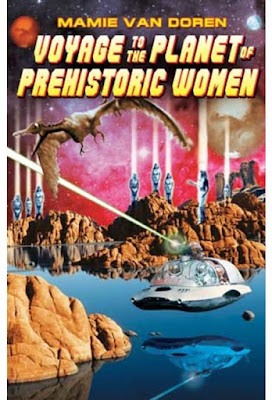
 Peter and Polly first met Roger Corman at a screening. (She thinks it was Last Year at Marienbad.) Afterwards, they chatted about film over coffee, and Roger was obviously impressed by their determination to find careers in the industry. In her words, “Roger wanted to make money and we wanted to make movies. It was a perfect marriage.” One of the duo’s first assignments for Roger was to improve upon a Soviet sci-fi film he’d bought. It had great special effects (including a space ship flying through the cosmos), and their job was to make it attractive to American drive-in audiences. After they rewrote the script to include a crash-landing on an exotic inter-galactic planet, Roger allotted them one week to shoot new footage that featured sexpot Mamie Van Doren as a mermaid wearing a seashell bra.. The result: Voyage to the Planet of Prehistoric Women.

 They were also all-purpose assistants when Roger directed his biker classic, The Wild Angels. Peter, who mid-production finagled the job of second-unit director, has said, “I went from getting the laundry to directing the picture in three weeks. Altogether, I worked twenty-two weeks—pre-production, shooting, cutting, dubbing—I haven’t learned as much since.” (Polly worked alongside him on a script rewrite, and also found herself doubling on the back of a chopper for female lead Nancy Sinatra.)

 The reward came when Roger approached them with another challenge. Actor Boris Karloff owed him two days of work from an earlier film, The Terror. This had been one of  Roger’s lesser flicks, and they were free to use its footage along with new material to make a horror movie of their own. It was Polly, still traumatized by the JFK assassination, who came up with the concept of a sniper running amok at a drive-in movie theatre. They collaborated on the script; Peter directed the film while also playing a key role. With the release of Targets in 1968. his Hollywood career was fully launched.

 Nor did Bogdanovich’s relationship with Corman end there. As my former colleague, filmmaker Joe Dante, once told me, “The thing about Roger is that you meet him on the way up, and if you’re not lucky you meet him again on your way down.” In 1979, while Bogdanovich was in a downward spiral, Roger hired him to shoot Saint Jack, about an American hustler in Singapore.. Dante remembers, “It turned out to be a good picture, and it put him back on the road.”


Tuesday, April 13, 2021

Larry McMurtry’s First Picture Show

In homage to the late Larry McMurtry, chronicler of the American West in all its complexity, I’ve been watching movies made from his work. There’s a whole slew of those, including Oscar winners Terms of Endearment and Brokeback Mountain. The very first was Hud (1963), adapted from a McMurtry novel. But The Last Picture Show (1971) was the first film (though not the last) for which McMurtry provided a screenplay, working with director Peter Bogdanovich to transform his own prose fiction for the screen.

 By the time he made The Last Picture Show, Bogdanovich was a veteran of Roger Corman’s B-movie world, responsible for the macabre thriller, Targets. But The Last Picture Show was his leap into the bigtime, and he made the most of it, turning out a moody tribute to a dying Texas town and its lonely, love-starved denizens. The opportunity to participate must have thrilled McMurtry, who was known to lament in later years that “Movies have largely lost interest in character. It is not without significance that two of the most publicized characters in the cinema have been a shark and a mechanical ape.”

 The Last Picture Show, filmed in evocative black & white, mostly in the tiny Texas town where McMurtry grew up, is all about character. In contrast to the year’s big Oscar winner, The French Connection, it moves forward slowly, exploring the intricate relationships of the town’s citizens, who are played by some of Hollywood’s finest actors. Cloris Leachman won an Oscar for her poignant role as a neglected housewife; other acting nominees for this film included a young Jeff Bridges (as the hero’s laid-back buddy) and Ellen Burstyn as a mother who sees her daughter’s character flaws—and her own—with all too much clarity. For Randy Quaid, in the small but sharply observed role of a well-to-do high school kid, it was the start of a major Hollywood career. 

 And of course The Last Picture Show marked the cinematic debut of model Cybill Shepherd, who plays Jacy Squires. Shepherd’s blonde beauty is electric on screen, and in one sense the entire town is shown to revolve around her haughty sense of sexual entitlement. But there’s a sad footnote to her presence in the film. Bogdanovich was apparently as bedazzled as his cast of characters. By the end of the shoot, he and Shepherd were together, leaving his wife and longtime artistic partner Polly Platt out in the cold. The multi-talented Polly, whom I was fortunate to interview at length in 2008, eventually recouped and went on to have a major Hollywood career of her own. But this film marked the end of the strong husband-and-wife collaboration that had seen them through their Corman years.

 The Last Picture Show was nominated for a total of eight Oscars, including Best Picture. Aside from Leachman’s win, the only other Oscar for the film was taken home by Ben Johnson, in the small but commanding role of the town’s moral conscience, known as Sam the Lion. The story is that he had to be persuaded by his mentor, John Ford, to accept the part. He was sought after by Bogdanovich, a true student of cinema history, partly because of his association (as stuntman and actor) with Ford and John Wayne, whose sidekick he often played. The Last Picture Show draws to a close with a final screening at the town’s one cinema. The movie on the screen is the 1948 classic western, Red River. This film, as well as Ben Johnson’s casting, represents a fond look back at the glory days of the silver screen.


Thursday, April 18, 2013

P is for Polly Platt, Who Survived Roger Corman and Much Else


The late Polly Platt is a natural choice for the letter P in the A to Z Challenge. She got her start with Roger Corman, went on to have a long and productive career, but didn’t get nearly enough credit for all she accomplished. Part of the problem is that she’s always been best known for her part in a real-life soap opera. She was married to wunderkind Peter Bogdanovich during the making of The Last Picture Show . . . and he done her wrong.

Polly and Peter were young marrieds, passionate about film, when they met Roger Corman in 1961, following a screening of Last Year at Marienbad. As Polly described it to me, “Roger wanted to make money and we wanted to make movies. It was a perfect marriage.” One of their first assignments was to take an effects-heavy Soviet film about space travel, add English-language dialogue, and incorporate new footage starring Mamie Van Doren, a large-bosomed Marilyn Monroe clone. Polly’s idea was that Van Doren and the other women added to the cast should play mermaids who cozy up to the space travelers. Polly rigged some very uncomfortable costumes out of rubber, with seashells decorating the breast area, and they chartered a boat at Venice Beach, sailing for Malibu.

Most of the mermaids got seasick en route, and -- because Van Doren was frightened of a possible shark sighting -- Polly had to double for her. The novice filmmakers made plenty of logistical mistakes, as when Polly, as production coordinator, tried to save money on rain effects. Instead of hiring a rain truck, she suggested pumping “rain” water out of ocean. But the water was full of sand, which clogged the pump machinery. Ooops. In any case, Polly and Peter survived Gill Women of Venus, which was later marketed as Voyage to the Planet of Prehistoric Women. When I first heard this story, I told Polly that it’s typical of Roger to find intelligent people with limited experience and not give them much in the way of practical information, instead saying, “Use your own best judgment.” She agreed this is exactly what happened.

Their best-known Corman collaboration was probably their first: The Wild Angels. Peter and Polly found themselves in the thick of things. They rewrote Chuck Griffith’s script (without credit), and soon Peter rose from his role as laundry-toting production assistant to become the director of second unit. He was also beaten up by the Hells Angels for real when he served as an extra in an on-camera fight scene. As for Polly, she designed the costumes, served as the stunt double for female lead Nancy Sinatra, and took seriously her role as Peter’s devoted spouse. Eventually, such experiences led to the opportunity to make Targets for Roger, after which The Last Picture Show brought them into the Hollywood mainstream. And, of course, brought Peter into Cybill Shepherd’s orbit.

Looking back at The Wild Angels, Polly remembered how puzzled she was by Roger’s behavior: “We were with Roger day and night on that picture, and we were his friends, and the remarkable thing is that even though we were with him more than anybody, there was no getting to know Roger. He was friendly, polite, pleasant, but there was no camaraderie. . . . He was literally unknowable.” She added, “He didn’t seem to take any pride in his work except how fast he could be. He bragged about that.”