Showing posts with label Peter Bogdanovich. Show all posts

Tuesday, March 19, 2024

Ferreting Out The Best Films I’ve Never Seen

While looking for something completely different at my local library, I came across a book I couldn’t resist. It was written by journalist Robert K. Elder, as a follow-up to his 2011 volume, The Film that Changed My Life. For that book, which garnered respectful reviews from film geeks like Leonard Maltin, Elder interviewed working directors about the films that had helped mold their own aesthetic.  In 2013, Elder was back with a sequel of sorts, The Best Film You’ve Never Seen. Talking mostly to those directors he had featured in his previous book, Elder here sussed out a list of obscure films that (for whatever reason) we movie lovers should know better.

 Part of the fun of The Best Film You’ve Never Seen is discovering movies about which we have little or no prior knowledge. The always perverse Todd Solondz (Welcome to the Dollhouse) makes a good case for an obscure indie called The Honeymoon Killers. And John Waters, the celebrated purveyor of deliberately skanky films like Pink Flamingos, argues persuasively that the Elizabeth Taylor/Richard Burton misfire known as Boom! can be a source of viewer delight.  The book has also alerted me to the dubious joys of Killer Klowns from Outer Space.

 Some of the directors’ choices are surprising. Several selected big studio productions from bygone eras. The late Peter Bogdanovich, who always had a passion for the stylistics of long ago, endorsed a 1932 Ernst Lubitsch gem, Trouble in Paradise. I’ve seen this frothy film about con artists and thieves, and can vouch for its charm. (Notably, it was selected in 1991 for inclusion in the National Film Registry.) I guess its age makes it obscure to most of today’s moviegoers, but what about Richard Curtis’s selection, Breaking Away? This amiable coming-of-age comedy about bicycle racing in Bloomington, Indiana, won an Academy Award for its Steve Tesich screenplay, and was nominated for four other Oscars, including Best Picture. I enjoy realizing that Curtis, known for such very English romantic farces as Four Weddings and a Funeral and Love Actually, is enamored of Tesich and Peter Yates’ cozy slice of Americana.

 It's fitting, I guess, that Bill Condon—best recalled for splashy Hollywood musicals like Chicago and Dreamgirls—would endorse Bob Fosse’s first screen directorial effort, Sweet Charity. But who would have guessed that Kevin Smith, the outrageous indie director of Clerks, would have a thing for Fred Zinnemann’s (and Paul Scofield’s) 1966 Best-Picture winner,  A Man for All Seasons? It seems that Smith’s Catholic school education, and the efforts of one particular nun, have made him passionate about Sir Thomas More’s doomed efforts to save the One True Church back during the reign of Henry VIII. Smith has high praise for the filmmaking as well as the subject matter, which he expresses in very Kevin Smith fashion. Book author Elder asks the question; “You’ve said that A Man for All Seasons is ‘porn for somebody who loves language.’ How does it differ from regular, missionary-position dialogue in other movies?” And here is Smith’s reply: “Because every line of dialogue is a close-up jizz shot to some degree or a really great close-up on double penetration.”  (You can’t get much more eloquent than that.)

 Reading this book has made me eager to check out some films I’ve only heard of, like Frank Perry’s The Swimmer and Vincente Minnelli’s Some Came Running (produced in the same year as his great triumph, Gigi).  And I’ll be pondering Henry Jaglom’s take on his friend and mentor Orson Welles’ F for Fake, which Jaglom tantalizingly calls “the most autobiographical of Orson’s films.”


Friday, January 5, 2024

I Left My Arts in San Francisco

Yes, it’s a not-very-good joke.  But, newly returned from the City by the Bay,  I can’t resist pointing out San Francisco’s cultural riches, which include world-class art museums, a long tradition of support for the local symphony and opera company, and such unique venues as the  Mechanics’ Institute Library. The latter is a private cultural center, founded back in 1854, that can be joined by anyone who purchases a membership. Located in San Francisco’s business district, it is particularly proud of its chess room and frequent chess tournaments. There’s also a lively interest in film. My colleague Matthew Kennedy (whose upcoming book for Oxford University Press is On Elizabeth Taylor: An Opinionated Guide) curates CinemaLit, a monthly array of themed film-related events housed at the institute. At the moment, he’s expanding on the intersection of chess and cinema by offering a series called “Chess in the Movies.” A chess coach will join him tonight, January 5, for a screening of 1983’s terrific Searching for Bobby Fischer. The Thomas Crown Affair, with its sexy chess game between Steve McQueen and Faye Dunaway, shows up later in January.

The first time I ever visited San Francisco, as a young teen from L.A., my family and I happened upon a film crew shooting a dramatic night scene outside a San Francisco walk-up. We were amused that we’d left SoCal, only to find that Hollywood had come to us. The movie was Experiment in Terror, and I know little about it, other than that it starred Lee Remick and Glenn Ford. As the title says, it was a thriller—and I’m sure the steep streets and dark alleys of the city added to what scares there were in the script. Steve McQueen of course starred far more memorably in another San Francisco movie. Bullitt (1968), playing a tough but non-conformist cop, took full advantage of the city’s topography, staging a breath-taking car chase up into the hills.

 The Sixties, of course, was an era marked by youthful rebellion against the status quo, and San Francisco was ground zero for stories of young runaways who came to the city’s Summer of Love to get their groove on. There’s only a tiny glimpse of San Francisco in on of 1967’s hugest hits, The Graduate: SoCal’s Benjamin Braddock—who finds only monkey mockery at the San Francisco Zoo—will pursue love and liberation from parental expectations mostly across the Bay Bridge, in collegiate Berkeley. But more typical of the era’s youth movies is a genre flick called Psych-Out (1968), from Dick Clark Productions (!) and the low-budget mavens at American International Pictures. There’s this deaf girl played by Susan Strasberg who comes to Haight-Ashbury in search of her brother. Of course she encounters lots of hippies (Dean Stockwell, Jack Nicholson), as well as a mysterious stoner (Bruce Dern in a really bad wig) whose delusions lead to disaster for all.

 As the Sixties gave way to the Seventies, some filmmakers thought of San Francisco as the perfect place to set a madcap romp. Peter Bogdanovich, riding high after The Last Picture Show, teamed big stars Barbra Streisand and Ryan O’Neal in a Bringing Up Baby-type story about a kook and a stuffy professor who are galvanized by the mix-up of four identical pieces of luggage with wildly differing contents. The  high-speed chase involving a stolen grocery store delivery bicycle and a plunge into the bay was intended, I’ve discovered, as a wacky homage to Bullitt. (The film ends with a cheeky reference to O’Neal’s recent mega-hit, Love  Story.)

 Adieu, Ryan O’Neal! More San Francisco movies yet to come, along with a salute to the late Glynis Johns!  (Thanks to Stan Berkowitz for prompting me to correct an egregious error in this post.) 


Friday, January 7, 2022

Peter Bogdanovich Has Come and Gone

Well, we just lost another of those daring young men who made the Hollywood films of the 1970s so exciting. Peter Bogdanovich is gone, at age 82. He broke into the industry quite young, causing many movie historians then and now to compare him to another “boy genius,” Orson Welles. Clearly relishing the comparison, he wore ascots, cultivated friendships with some of the greats of the Golden Age, and shot two of  his best films (The Last Picture Show and Paper Moon) in living black & white.

 When I think of Bogdanovich, though, Orson Welles doesn’t come to mind. Instead I remember Roger Corman, my former boss, as the man who gave Bogdanovich his first big break. The story has been told many times, but I much prefer the version of Polly Platt, Bogdanovich’s first wife, his creative partner, and the woman he dumped for Cybill Shepherd on the set of The Last Picture Show. Polly, who passed away in 2011, spoke to me at length three years earlier, about how Roger jumpstarted the movie careers of two young east-coasters who were passionate about the film medium.

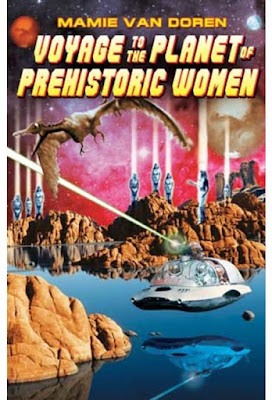
 Peter and Polly first met Roger Corman at a screening. (She thinks it was Last Year at Marienbad.) Afterwards, they chatted about film over coffee, and Roger was obviously impressed by their determination to find careers in the industry. In her words, “Roger wanted to make money and we wanted to make movies. It was a perfect marriage.” One of the duo’s first assignments for Roger was to improve upon a Soviet sci-fi film he’d bought. It had great special effects (including a space ship flying through the cosmos), and their job was to make it attractive to American drive-in audiences. After they rewrote the script to include a crash-landing on an exotic inter-galactic planet, Roger allotted them one week to shoot new footage that featured sexpot Mamie Van Doren as a mermaid wearing a seashell bra.. The result: Voyage to the Planet of Prehistoric Women.

 They were also all-purpose assistants when Roger directed his biker classic, The Wild Angels. Peter, who mid-production finagled the job of second-unit director, has said, “I went from getting the laundry to directing the picture in three weeks. Altogether, I worked twenty-two weeks—pre-production, shooting, cutting, dubbing—I haven’t learned as much since.” (Polly worked alongside him on a script rewrite, and also found herself doubling on the back of a chopper for female lead Nancy Sinatra.)

 The reward came when Roger approached them with another challenge. Actor Boris Karloff owed him two days of work from an earlier film, The Terror. This had been one of  Roger’s lesser flicks, and they were free to use its footage along with new material to make a horror movie of their own. It was Polly, still traumatized by the JFK assassination, who came up with the concept of a sniper running amok at a drive-in movie theatre. They collaborated on the script; Peter directed the film while also playing a key role. With the release of Targets in 1968. his Hollywood career was fully launched.

 Nor did Bogdanovich’s relationship with Corman end there. As my former colleague, filmmaker Joe Dante, once told me, “The thing about Roger is that you meet him on the way up, and if you’re not lucky you meet him again on your way down.” In 1979, while Bogdanovich was in a downward spiral, Roger hired him to shoot Saint Jack, about an American hustler in Singapore.. Dante remembers, “It turned out to be a good picture, and it put him back on the road.”