Showing posts with label Larry Gelbart. Show all posts

Tuesday, November 26, 2024

The Gregarious, Gorgeous Teri Garr

I once had the good fortune of seeing Teri Garr up close and personal. It was decades ago, long before the brilliant comic actress was diagnosed with multiple sclerosis, the cruel disease that recently ended her life at age 79. The place: the tiny, cramped locker room at Jane Fonda’s then-famous West Hollywood exercise studio. Both of us were changing out of exercise gear. She was among friends, clearly—and I saw her as a true life force, lively and exuberant.

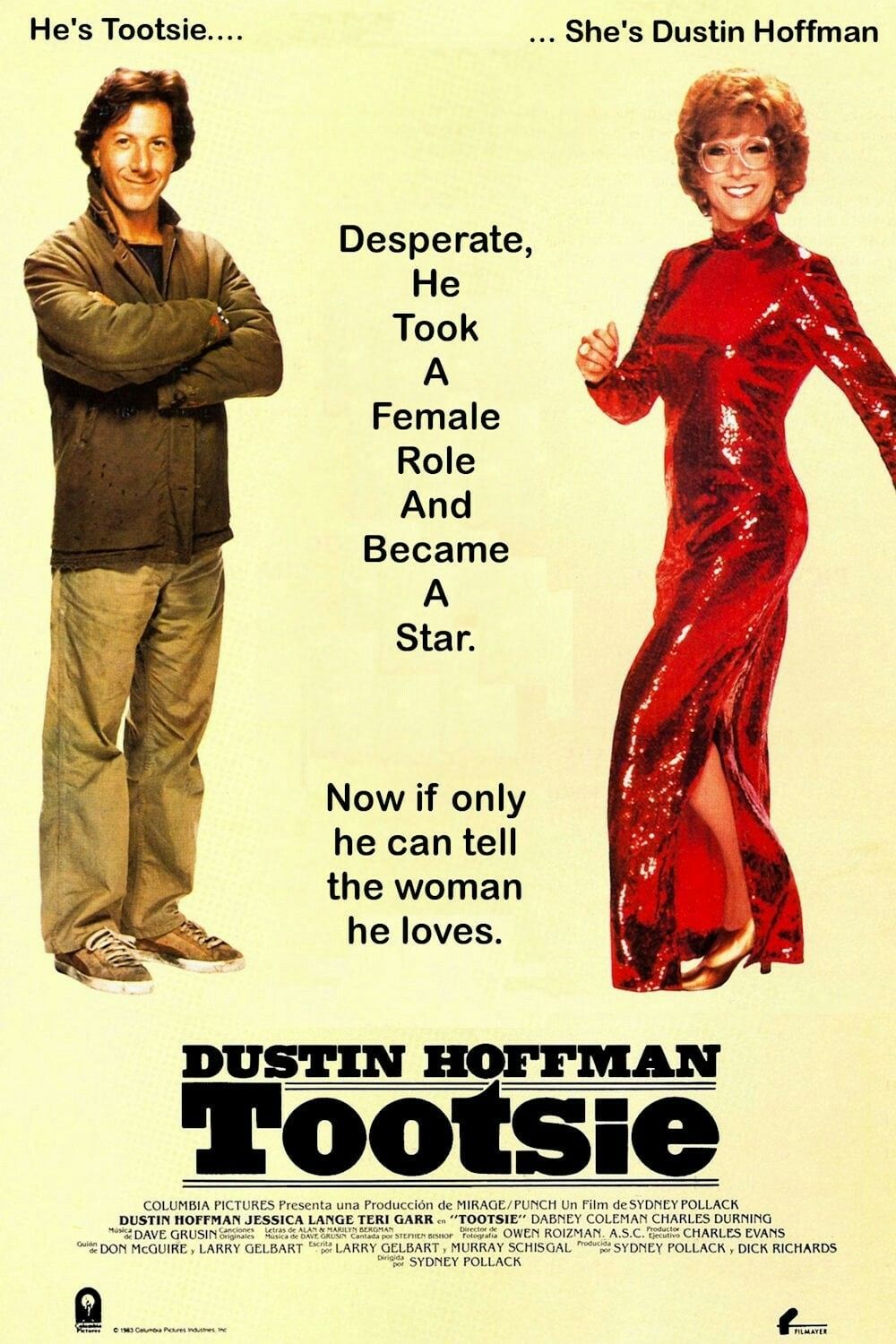
 She brought that same exuberance to her acting career, which included the wife role in Close Encounters of the Third Kind and the adorable mädchen who loved a roll in the hay in Mel Brooks’ Young Frankenstein. Her biggest screen success came in 1982, with the release of Tootsie, in which Dustin Hoffman stars as an out-of-work actor who disguises himself as a woman to win a soap opera role. The gender confusion that arises in this Sydney Pollack film is hilarious. But it also seems quite modern, given that there’s a move afoot to deny a newly-elected transgender U.S. congresswoman the right to use the women’s restroom in the Capitol. (So what, pray tell, is she supposed to do when the need arises?) 

 When Tootsie was being cast, Garr apparently hankered for the role of the female lead. Julie is depicted as a slightly damaged but sturdy soul who interacts with Hoffman’s Dorothy Michaels in a popular hospital-based soap opera. (She introduces herself to the new cast member as the “hospital slut.”) Julie treasures Dorothy’s friendship and is guided by her relationship wisdom, but has no inkling that this sassy older woman is actually a man—and that he’s in love with her. After losing the role of Julie to Jessica Lange, Garr was reluctant to take the smaller part of Sandy, the neurotic would-be actress who’s Michael’s protégée and at one point his accidental lover. (Don’t ask!) Luckily for us, Garr ultimately changed her mind about the role. Sandy’s uproarious neediness is a highlight of the film, and resulted in an Oscar nomination for Best Supporting Actress. Ironically, Jessica Lange was also nominated in this category, and took home the gold statuette: it was the only win for Tootsie that evening despite a whooping nine nominations. (This was the year of Gandhi—and the gender-bending Victor/Victoria). But if Lange won the Oscar, Teri Garr completely won my heart.

 Like all the greatest comedies, Tootsie has something to say, about the human condition. Its particular focus is on how women are treated in what often continues to feel like a man’s world. What Dustin Hoffman’s character discovers—in this beautifully directed, beautifully written, beautifully edited film—is that women benefit from being able to stand up for themselves. And, as a man, he comes to acknowledge that women need, and deserve, basic respect. Two prominent characters who have not learned this lesson are Dabney Coleman as an outrageously sexist TV director and George Gaynes as a preening actor who makes it his business to tongue-kiss every actress on camera. (By contrast, Julie’s father, as played by Charles Durning, is a manly but gentle widower who is smitten by “Dorothy” and complicates things by proposing marriage.)  Big kudos to screenwriter Larry Gelbart for finding the funny in the battle of the sexes while acknowledging that his characters all have something to learn. One of those characters of course is Garr’s Sandy. But she fights to hold onto her sense of humor. That of course also describes Garr, who considered titling her memoir, Does This Wheelchair Make Me Look Fat?  


Tuesday, April 12, 2022

Clothes Make the Man?: “Some Like It Hot,” “Tootsie,” and “Mrs. Doubtfire”

It’s as old as Shakespeare: a man dressing up in women’s clothing. Of course in Shakespeare’s day there was an added complication. Because rules of public morality determined that it would be indecent to have a woman in a theatre troupe, young men put on dresses and wigs to play all the female roles. This helps explain why in so many Shakespearean comedies (like Twelfth Night and As You Like It) female characters spend much of their time in male disguise. The resulting gender confusion was explored by Tom Stoppard and company in one of my favorite romantic films, Shakespeare in Love. In that 1998 Best Picture winner, the theatre-mad Viola de Lesseps (Gwyneth Paltrow) disguises herself as a male—complete with a tiny mustache—so she can audition to join Shakespeare’s acting company. She ultimately originates the role of Juliet while having a doomed affair with the playwright himself.

 Usually, on stage and in movies, it’s men dressing up as women. Even long after actresses were accepted on stage, the British have continued to love the buffoonish spectacle of a well-padded man tricked out in a woman’s petticoat and bonnet. The so-called “dame show” has been a holiday staple for hundreds of years. Clearly it was this tradition that inspired Ray Bolger’s starring role in the hit musical version of a popular stage farce, Charley’s Aunt, in which a young man tries to further his romantic goals by disguising himself as a visiting dowager.  The British original, which debuted back in 1892, was ultimately filmed at least 13 times, in productions all over the world. No one, it seems, could get enough of a guy sporting a flouncy skirt.

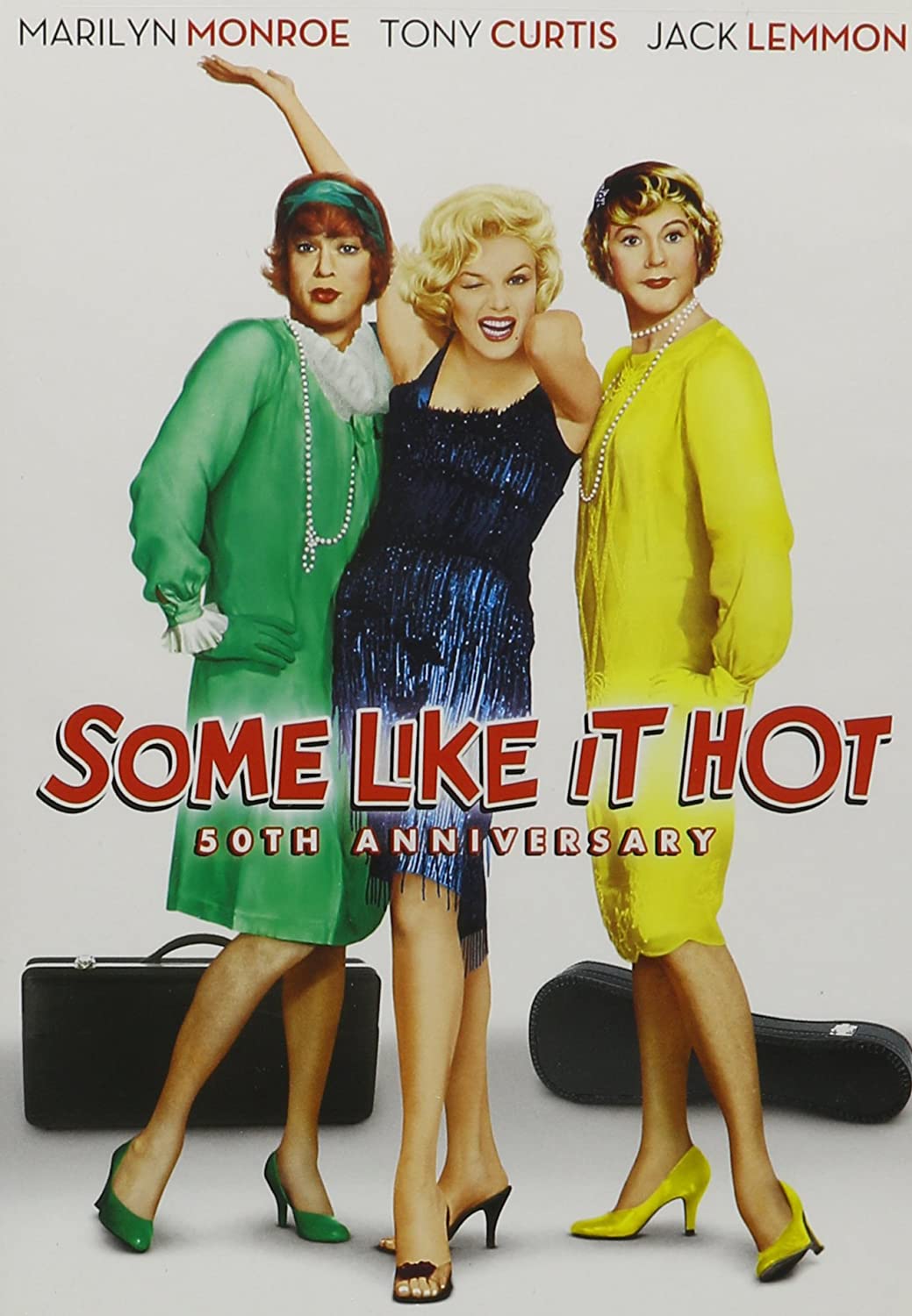
 In 1959, Billy Wilder and I.A.L.Diamond updated the “dame show” tradition by combining it with a gangster thriller in Some Like It Hot. In this beloved comedy, two musicians played by Tony Curtis and Jack Lemmon accidentally witness the St. Valentine’s Day Massacre. Desperate to escape detection, they disguise themselves as women and join an all-girl band en route from Chicago to Miami Beach. Their masquerade involves the usual men-dressed-as-women tropes, as they wobble in high heels and struggle to project coy feminine charm. But the two authors add their own hilarious touches, as Curtis takes on a second identity (that of a grieving millionaire who’s lost his sex drive) in order to woo band singer Marilyn Monroe, while Lemmon somehow finds himself engaged to marry dingbat tycoon Joe E. Brown.

 Twenty-three years later, Larry Gelbart and some others put a new theatrical spin on the man-in-woman’s-clothing comedy. The film was Tootsie: its central character, Michael Dorsey—played by Dustin Hoffman—is a talented but pugnacious stage actor who’s burned so many bridges that he can only land an acting job by trying on a new gender. As Dorothy Michaels, he lands a gig on a soap opera, quickly becoming a fan favorite. Tootsie is full of subtle commentary on how women are treated, as Michael’s attitudes evolve while his fanbase grows.

Then (sigh) there’s 1993’s Mrs. Doubfire, in which Robin Williams, faced with losing his children to divorce, gets the bright idea of turning himself into a cozy British nanny in order to be near them. Completely fooling his ex-wife and everyone else, he manages to prove that he’s indispensable to the happy running of their household. I tried watching this on a recent plane flight, and found the playing out of this family story grotesque in its reliance on crude gender stereotypes. A dad as Mr. Mom showing off a D-cup? Yuck.